Climate Sentiment & Engagement Modeling – NASA Facebook Comments Analysis
Domain & Duration
Environmental Media / Social Sentiment Analytics | 7 Days
Tools & Techniques
- Python, Pandas, NLTK, Scikit‑learn, Isolation Forest, Power BI
- Sentiment Analysis, Topic Modeling, Engagement Tier Classification, Anomaly Detection
Project Overview
This project analyzes public sentiment and engagement patterns from NASA’s climate‑related Facebook posts. By mining thousands of user comments, it uncovers how audiences react to climate content, identifies behavioral clusters, and flags anomalies in engagement — offering strategic insights for science communication and public outreach.
Key Techniques & Insights
- Sentiment Modeling — Classified comments as positive, negative, or neutral using polarity scoring.
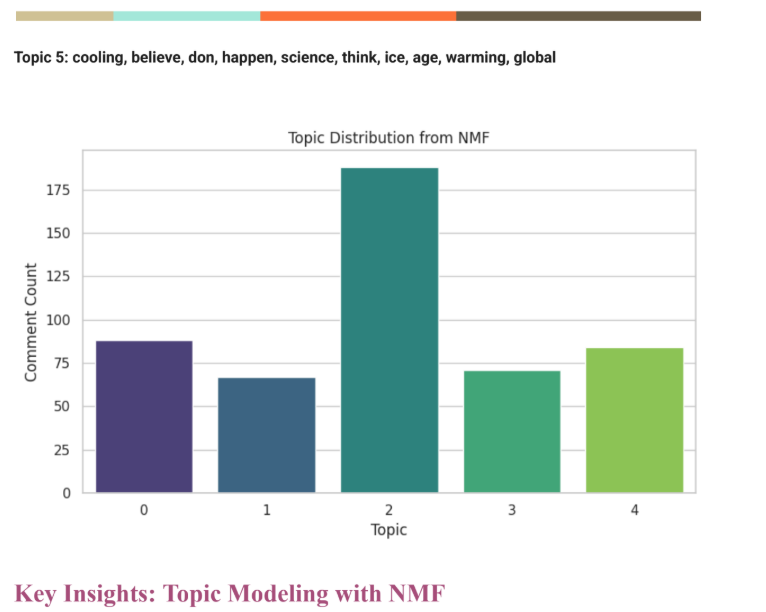
- Topic Extraction — NLP revealed recurring themes in climate discourse.
- Engagement Tiering — Segmented users into low, medium, and high engagement groups.
- Clustering Analysis — Identified three behavioral clusters using PCA + unsupervised learning:
- Mainstream Performers
- Specialized Innovators
- Emerging Niche Apps
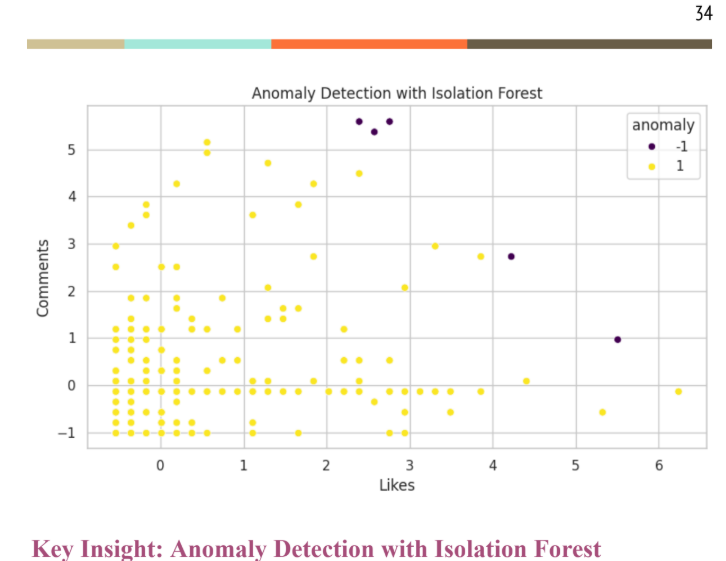
- Anomaly Detection — Isolation Forest flagged outlier comments and engagement spikes.
- Dashboarding — Power BI visuals tracked sentiment trends, engagement tiers, and content performance.
Impact & Strategic Value
- Helped NASA and similar organizations understand public climate sentiment.
- Provided a framework for tailoring content to different engagement tiers.
- Enabled early detection of misinformation or polarizing reactions.
- Delivered a scalable model for analyzing social media feedback in science communication.
Key Insight Summary
Topic 2 dominates user discourse, indicating a strong concentration of comments around a specific climate‑related theme. Planetary Trends sparked the most engagement with balanced sentiment, while Climate Change Debate drew the highest negativity — highlighting polarized public reactions across themes.
View on GitHub ← Back to Home